Is Your Boiler Safe? How to Check It’s Inspected, Certified and Compliant
Boiler Service
Knowing how to check if a boiler is gas safe starts with the engineer. Check their ID card, match the number on the Gas Safe Register and see the papers.
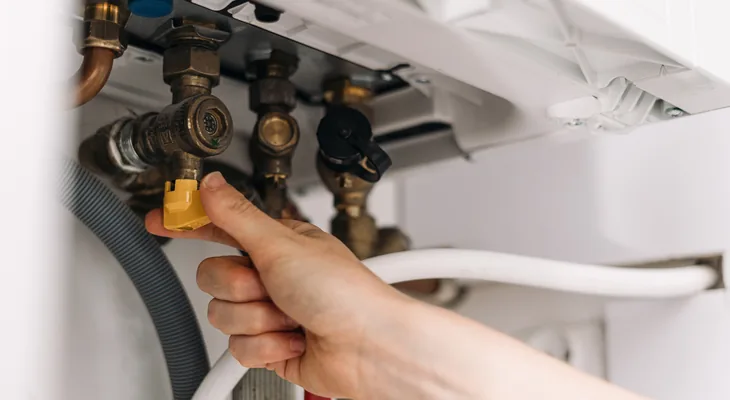
A boiler usually loses pressure because of a small leak, a worn component or a little trapped air escaping, and in most cases, you can safely top it back up yourself. A drop that keeps returning is different, however, because it points to a fault that needs an engineer.
If your heating has gone cold and you are asking yourself, ‘why is my boiler losing pressure?’, you are not alone, because it is a very common problem. It rarely turns out to be as serious as it feels, and a central heating leak is only one of several possible causes. First, though, it helps to know what a healthy reading looks like.
Most modern boilers are designed to sit at around 1 to 1.5 bar when the heating is cold, and the boiler pressure gauge on the front of the unit shows you where yours stands. Many gauges have a green zone, and the needle should stay inside it. When the system heats up, the water expands and the reading may rise towards 2 bar, which is normal because the expansion vessel absorbs the extra volume.
If the pressure climbs too high, the pressure relief valve is there as a safety measure, releasing water through a small pipe outside your home. A reading that has fallen below 1 bar, or a boiler that has locked out, tells you something has changed, perhaps after bleeding radiators or because of a slow leak. We will cover how to repressurise a boiler shortly, but first it is worth understanding why the pressure drops.
With the reading on the boiler pressure gauge in mind, the next step is to work out what is pulling it down. In most homes the cause is one of a handful of everyday faults, and several are easy to spot:
Of these, a leak is the one people worry about most, because it can stay hidden while the damage builds quietly, so it deserves a closer look next.
A leak is rarely as dramatic as a burst pipe, and more often it is a slow weep that you only notice through falling pressure. A sensible first step is a walk round the house, looking for damp patches, ceiling stains, rusty marks around radiator valves, or drips beneath the boiler. It is also worth checking the outside discharge pipe, because water dripping from it means the pressure relief valve has been operating, often due to an expansion vessel that is no longer doing its job.
A filling loop left open after an earlier top-up can have the same effect, so make sure it is fully closed. If you find no sign of water and the boiler is running normally, topping up the system is a safe thing to try. Knowing how to repressurise a boiler is a useful skill, and the steps are simpler than most people expect.
Before you begin, check your boiler’s manual, because the method varies between models, and make sure the boiler is switched off and cool. Most systems use an external filling loop, which is a flexible braided hose with a valve at each end:
If the pressure relief valve is discharging, or you suspect the expansion vessel, leave it alone and call an engineer. Once the gauge is steady, there is one more job worth doing.
With the pressure back where it should be, the real test is what happens over the next few days. Keep an eye on the pressure gauge each morning, and if it holds steady, the drop was probably a one-off, perhaps down to bleeding radiators or a top-up that was simply overdue.
If you find yourself asking ‘why is my boiler losing pressure again?’, the pattern matters because a fall of a few tenths of a bar over several weeks suggests something minor, whereas a noticeable drop within days points to an active fault.
Check the pressure relief valve discharge pipe for drips, look again at the radiators, pipework and floor beneath the boiler, and remember that a hidden central heating leak under floorboards or inside a wall will not show itself easily. If the pressure keeps falling despite all of this, it is time to bring in a professional.
If a top-up does not hold, that is the point where our engineers step in. Our first job is to answer the question ‘why is my boiler losing pressure?’ for your particular system, rather than guessing, which means checking the boiler, pipework, radiators and fittings. If we suspect a central heating leak, we use accurate, non-invasive leak detection tools, so we can locate it without lifting floors or opening walls.
Whether the fault is as simple as a worn filling loop or something more involved, we explain exactly what we have found before any work begins, and our fixed quote includes any additional work. We are available 24/7 and accredited by Gas Safe, and every boiler repair carries a 12-month workmanship guarantee. If you would like to be more confident next time, we are also happy to show you how to repressurise a boiler and when bleeding radiators is worth doing.
A boiler that keeps losing pressure is telling you something, and while a careful top-up will often settle things, a drop that returns deserves a proper diagnosis. At Greenstar, our engineers will find the cause, explain it plainly and fix it at a fair, fixed price. Call the team on 01202 355 344 or send your details through our contact form, and we will take it from there.

Recent Posts
Knowing how to check if a boiler is gas safe starts with the engineer. Check their ID card, match the number on the Gas Safe Register and see the papers.

UK boiler installation regulations require Gas Safe registration, council notification and a compliance certificate for every new or replacement boiler.

Heat pumps, hydrogen ready boilers and hybrid systems now shape the future of home heating, with grants available to help cover the cost of switching.