Boiler Maintenance Tips to Improve Your Boiler Efficiency
Uncategorised
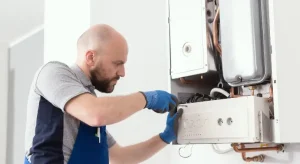
Boiler maintenance tips improve boiler efficiency with annual servicing, pressure and radiator checks, keeping the boiler area clear, and insulating pipes.
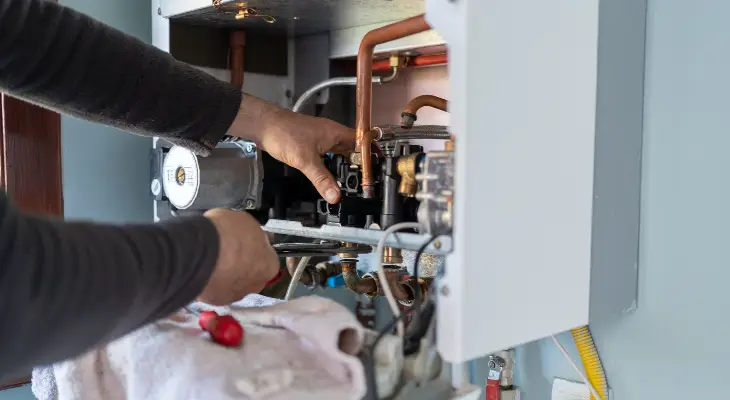
Choosing a new boiler affects your heating bills, comfort, and how reliable your system feels day-to-day. Yet, for many homeowners, the first question is cost, and more specifically, whether gas vs electric boilers are cheaper to run in the UK.
This question often comes up when a boiler shows its age or breaks down. Online advice can be conflicting, especially when efficiency ratings, fuel prices, and future changes are discussed together. It is easy to focus on efficiency, but that does not always reflect what you pay each month. For most homes, gas boilers are currently cheaper to run than electric boilers due to fuel costs, not boiler efficiency.
This guide compares gas and electric boilers in clear, practical terms, covering running costs, household demand, and real-world use, so you can choose the option that best suits your home and budget.
Gas boilers are usually cheaper to run than electric boilers in the UK because of the difference in fuel prices, not because electric boilers are inefficient.
Ofgem sets a price cap on the maximum unit rates suppliers can charge households on standard variable tariffs [1]. Between 1 January and 31 March 2026, the capped average unit price for electricity is 27.69 pence per kWh, while the capped price for gas is 5.93 pence per kWh. This means electricity costs more than four times as much per unit as gas for most households paying by direct debit.
Electric boilers convert nearly all the electricity they use into heat, but the higher unit cost of electricity usually leads to higher operating costs. Gas boilers are slightly less efficient at the point of use, but the much lower cost of gas generally results in lower monthly heating bills, especially in homes that use heating regularly.
This is why gas boilers remain the cheaper option for most UK households. Even with high efficiency, electricity prices make up a larger share of overall operating costs, especially during colder months when heating demand increases.
For UK homes already connected to the gas grid, modern gas boilers can still provide reliable heating at a predictable running cost. Government analysis notes that up to 1.7 million domestic gas boilers are installed each year, with at least 10 million more expected between 2025 and 2035, even as alternative technologies grow [2].
The consultation highlights that real-world efficiency often differs from laboratory ratings. Improving how boilers operate in homes could increase the average performance of new gas boilers by up to 6%, which was estimated to save around £30 per year for a typical household, depending on gas prices.
Condensing boilers achieve their best efficiency when return water temperatures are low enough for condensation, typically below 55°C. Research suggests that about half of UK homes already have radiators sized to provide comfort at this temperature on an average winter day, so efficiency gains can often be achieved through proper setup instead of a complete system replacement.
System design also matters. Combination boilers account for about 80% of installations, and many are oversized. An average home may need about 6kW for space heating in cold conditions, but boilers are often sized at 24kW or higher to meet hot water demand. When boilers cannot modulate down effectively, efficiency declines and wear increases, so proper sizing and installation are really important.
Electric boilers can be a practical option in some homes, particularly where heating demand is low and predictable.
They are often suitable for:
Electric boilers are compact and do not require a flue, which reduces installation complexity and can help keep upfront costs down. However, running costs remain linked to electricity prices, so usage patterns and tariffs need careful consideration.
Homes that use off-peak electricity or generate some of their own power may find electric boilers easier to manage, but they are less suited for high-demand households.
Maintenance affects how safely and reliably a boiler runs over time. A regular boiler service can reduce the risk of breakdowns and help the system operate efficiently for longer.
Gas Safe warns that any domestic gas appliance can produce carbon monoxide if it is not fitted, repaired, or maintained correctly [3]. Carbon monoxide is highly poisonous and cannot be seen, smelled, or tasted, which is why an annual check by a Gas Safe registered engineer is recommended. A safety check can include inspecting pipework, checking for gas leaks, and ensuring flues, vents, and combustion are functioning as intended.
Servicing also helps identify early issues before they become larger repairs and reduces risks such as gas leaks, fires, and explosions from faulty appliances or pipework.
Electric boilers do not burn fuel, so they do not pose a carbon monoxide risk and often require less safety-related maintenance. They can still develop faults, and their lifespan depends on installation quality and usage.
Gas boilers also benefit from readily available parts and an extensive network of qualified engineers, which can help reduce downtime during boiler repairs.
Heating controls directly affect energy use and heating bills. How and when heating runs often matter as much as the boiler itself.
A UK government rapid evidence assessment found that time and temperature controls reduce energy use by limiting heating to occupied periods and avoiding unnecessary overheating [4]. Homes with effective controls, such as programmers, thermostats, and thermostatic radiator valves, consistently use less energy than similar homes without them, even when using the same boiler.
The report also shows that savings depend on correct setup and everyday use. Poorly configured or misunderstood controls reduce benefits, while simple adjustments, such as realistic schedules and room-by-room controls, can improve comfort and reduce wasted heat.
Our boiler controls service explains how a better control setup supports efficient heating.
The best boiler choice depends on your home and your heating usage. Property size, insulation, and hot water demand all affect comfort and running costs. For many UK households, gas boilers remain cheaper to run because gas costs less per unit than electricity. Electric boilers are suitable for smaller or well-insulated homes, or for properties without access to mains gas.
Upfront costs also matter. Gas boilers usually cost more to install due to flues and gas safety requirements, while electric boilers are often cheaper to fit where there is no gas supply. Greenstar offers interest-free boiler finance to help spread the cost of replacement. For clear, practical advice, our engineers can assess your current system and recommend the most suitable option for your home.
Call 01202 355 344 or arrange your free consultation to plan the next step in your boiler installation or replacement.
[1] GOV.UK, “Ofgem sets a price cap on the maximum unit rates suppliers can charge households on standard variable tariffs”: https://www.ofgem.gov.uk/information-consumers/energy-advice-households/energy-price-cap-explained
[2] GOV.UK, “Government analysis”: https://assets.publishing.service.gov.uk/media/63e25c96e90e076266ed429c/Improving_boiler_standards_and_efficiency_consultation.pdf
[3] Gas Safe: https://www.gassaferegister.co.uk/gas-safety/home-gas-safety/check-your-gas-appliances/
[4] GOV.UK, “Rapid Evidence Assessment”: https://assets.publishing.service.gov.uk/media/5a7b9a8ee5274a7318b8fbc9/FINALHow_heating_controls_affect_domestic_energy_demand_-_A_Rapid_Evidence_Assessment.pdf

Recent Posts
Boiler maintenance tips improve boiler efficiency with annual servicing, pressure and radiator checks, keeping the boiler area clear, and insulating pipes.
Heating system efficiency improves when you look after your boiler, maintain radiators, and set heating controls so your home stays warm using less energy.
Learn what to expect during your boiler installation. Understand how to prepare, what steps to follow, and what to expect from start to finish. Book now.